
Introduction
Leadership styles shape team performance, organizational culture, and overall success. Understanding different styles helps leaders choose the right approach for specific situations.
Among the most effective approaches, servant leadership and transformational leadership are widely recognized for their focus on people, motivation, and growth.
This guide provides an in-depth overview of leadership styles, servant leadership, and transformational leadership, highlighting traits, techniques, benefits, and real-world examples.
What Are Leadership Styles?
Leadership styles are the approaches leaders take to guide, influence, and motivate their teams. Each style reflects a leader’s principles, personality, and priorities.
Leadership styles directly impact:
-
Team Motivation: How teams engage and perform.
-
Decision-Making: How choices are evaluated and implemented.
-
Conflict Resolution: How disagreements are managed.
-
Adaptability: Ability to respond to different situations effectively.
Common Leadership Styles
-
Autocratic Leadership:
Centralized decision-making; works in high-pressure or crisis scenarios but may limit innovation. -
Democratic Leadership:
Encourages team participation and feedback; fosters engagement and morale. -
Laissez-Faire Leadership:
Empowers team members to make decisions; effective with skilled, self-motivated teams. -
Servant Leadership:
Prioritizes team needs, employee development, and empowerment. Fosters trust, collaboration, and loyalty. -
Transformational Leadership:
Inspires and motivates teams to exceed expectations. Focuses on vision, innovation, and personal development.
Servant Leadership
Servant leadership is a people-centered style where the leader’s primary goal is to help others succeed. It emphasizes empathy, support, and ethical behavior.
Key Characteristics
-
Empathy: Understand and meet team members’ needs.
-
Listening: Actively respond to feedback and concerns.
-
Stewardship: Promote team growth responsibly.
-
Commitment to Development: Help individuals reach full potential.
-
Community Building: Foster a collaborative and inclusive environment.
Benefits
-
Higher employee satisfaction and loyalty
-
Enhanced team collaboration and trust
-
Increased productivity and engagement
-
Reduced turnover
-
Positive organizational culture
Examples
Servant leadership is observed in organizations prioritizing employee well-being and mentorship. Influential figures include Mahatma Gandhi, Nelson Mandela, and modern leaders who empower their teams.
Transformational Leadership
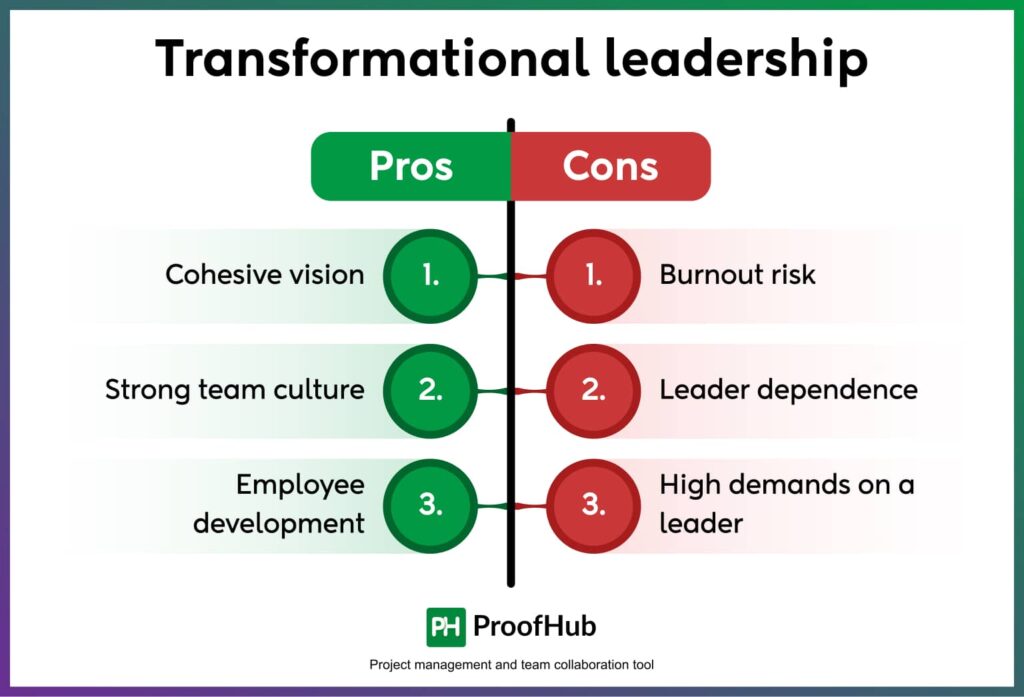
Transformational leadership focuses on inspiring and motivating teams to achieve extraordinary results. Leaders emphasize vision, innovation, and growth.
Key Characteristics
-
Visionary Thinking: Set aspirational goals and guide teams.
-
Motivation: Inspire teams to strive for excellence.
-
Innovation: Encourage creativity and embrace change.
-
Influence and Inspiration: Boost enthusiasm and dedication.
-
Individualized Consideration: Recognize and nurture individual strengths.
Benefits
-
Higher team performance and productivity
-
Increased engagement and commitment
-
Enhanced creativity and problem-solving
-
Better organizational adaptability
-
Long-term development and innovation
Examples
Transformational leaders often drive innovation and organizational change. Notable examples include Steve Jobs, Elon Musk, and Martin Luther King Jr., who inspired teams and followers toward ambitious goals.
Comparing Servant and Transformational Leadership
| Leadership Style | Servant Leadership | Transformational Leadership |
|---|---|---|
| Focus | People-centered | Vision-centered |
| Approach | Empathy, support, ethics | Motivation, innovation, vision |
| Outcome | Team loyalty, growth | Superior performance, creativity |
Both styles aim to positively impact teams, but servant leadership focuses on support and empowerment, while transformational leadership emphasizes vision and performance.
How to Build Leadership Skills
Leadership skills can be developed with practice, reflection, and learning:
-
Self-Assessment: Identify strengths and areas for growth.
-
Continuous Learning: Attend workshops, seminars, and training.
-
Mentorship: Learn from experienced leaders.
-
Practice and Reflection: Apply techniques in real scenarios and evaluate results.
-
Feedback: Seek input from peers, mentors, and team members.
Leadership Challenges
Leaders must navigate obstacles such as:
-
Balancing authority with empathy
-
Motivating diverse teams
-
Adapting styles to different contexts
-
Managing conflict effectively
-
Maintaining ethical standards
Success requires self-awareness, adaptability, and continuous improvement.
Benefits of Understanding Leadership Styles
-
Stronger team engagement and performance
-
Better decision-making and problem-solving
-
Enhanced organizational culture
-
Improved adaptability and change management
-
Personal development and career advancement
Future of Leadership
Modern leadership prioritizes:
-
Emotional intelligence
-
Adaptability
-
Inclusion and diversity
-
Ethical decision-making
Servant and transformational leadership will continue to be influential due to their emphasis on people, motivation, and innovation.
Developing leadership skills and understanding styles remain critical for success in personal, professional, and organizational contexts.
Conclusion
Leadership styles, including servant and transformational leadership, shape how leaders guide, influence, and inspire teams. Servant leadership focuses on serving and empowering people, while transformational leadership emphasizes vision, motivation, and creativity.
By understanding leadership styles and refining leadership skills, individuals can become effective, inspiring leaders capable of driving team growth, engagement, and long-term success.

