
Introduction
Leadership is a critical skill that shapes performance in personal, professional, and organizational contexts. To develop strong leadership abilities, it is essential to understand the definition of leadership, as well as specific styles like autocratic leadership and democratic leadership.
Leadership goes beyond authority—it is about guiding, inspiring, and motivating teams to achieve shared goals. The choice of leadership style influences team performance, culture, decision-making, and organizational success.
This guide offers a detailed overview of leadership definition, autocratic leadership, and democratic leadership, using repeated keywords, structured H2 and H3 headings, and SEO-friendly content.
Leadership Definition
Leadership is the ability to persuade, guide, and motivate people or organizations toward shared objectives. Strong leadership requires:
-
Vision: Providing clear direction for the team.
-
Communication Skills: Conveying ideas effectively.
-
Integrity: Acting ethically and earning trust.
-
Empathy: Understanding and addressing team needs.
-
Adaptability: Responding flexibly to changing situations.
-
Decision-Making Capabilities: Making timely, effective decisions.
Importance of Leadership
-
Goal Achievement: Aligning teams to reach objectives.
-
Motivation: Inspiring individuals to perform their best.
-
Team Development: Promoting skill growth and collaboration.
-
Organizational Success: Supporting long-term growth and sustainability.
-
Conflict Resolution: Managing disagreements while maintaining unity.
Leadership Styles
Leadership styles describe how leaders guide and influence their teams. Understanding different styles helps in selecting the appropriate approach for specific situations.
Autocratic Leadership
Autocratic leadership, also called authoritarian leadership, centralizes decision-making in the leader, who maintains control over major choices.
Key Characteristics of Autocratic Leadership
-
Leader makes decisions independently.
-
Team input is minimal.
-
High control over processes and procedures.
-
Clear guidelines and expectations.
-
Focus on efficiency and productivity.
Benefits of Autocratic Leadership
-
Quick and decisive decision-making.
-
Clear direction for teams.
-
Effective in emergencies or high-pressure scenarios.
-
High productivity for routine or urgent tasks.
Challenges of Autocratic Leadership
-
Limited creativity and innovation from the team.
-
Reduced morale and engagement.
-
Heavy reliance on the leader.
-
Risk of burnout due to excessive control.
Optimal Use: Autocratic leadership is effective in crisis situations, disciplined systems, or with inexperienced teams.
Democratic Leadership
Democratic leadership, also called participative leadership, encourages team involvement in decision-making. Leaders collaborate with their teams and value input and discussion.
Key Characteristics of Democratic Leadership
-
Inclusive decision-making processes.
-
Open communication and active listening.
-
Encouragement of creativity and team contributions.
-
Focus on collaboration and consensus.
-
Empathy and support for team members.
Benefits of Democratic Leadership
-
Higher team engagement and motivation.
-
Increased creativity and innovation.
-
Better decisions with diverse perspectives.
-
Stronger team cohesion and morale.
-
Employee growth and empowerment.
Challenges of Democratic Leadership
-
Slower decision-making due to consultations.
-
Potential for conflicts with differing opinions.
-
Requires skilled and cooperative team members.
-
Less suitable for high-pressure, time-sensitive tasks.
Optimal Use: Democratic leadership is ideal in dynamic, knowledge-based, and innovation-focused environments.
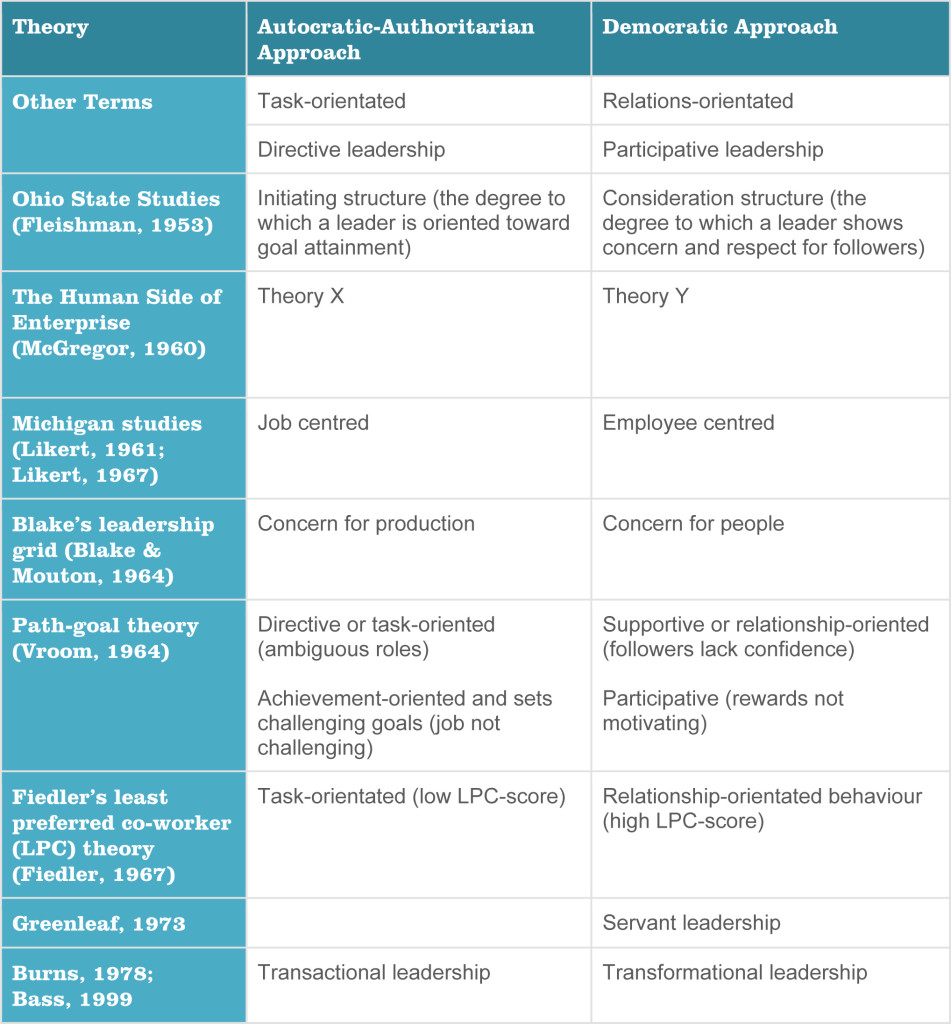
Comparing Autocratic and Democratic Leadership
| Aspect | Autocratic Leadership | Democratic Leadership |
|---|---|---|
| Decision-Making | Leader decides independently | Leader collaborates with team |
| Communication | One-way direction | Two-way or open dialogue |
| Innovation | Limited | Encouraged and supported |
| Speed | Fast | Slower due to consultation |
| Team Morale | May be low | Generally high |
| Optimal Use | Crisis, routine tasks | Creative, dynamic situations |
Both styles have advantages and limitations. Effective leaders adapt their approach based on team needs, organizational context, and situational demands.
Developing Leadership Skills
Leadership skills can be cultivated through practice, learning, and reflection.
Steps to Improve Leadership Skills
-
Self-Assessment: Identify strengths and areas for improvement.
-
Continuous Learning: Attend workshops, seminars, and leadership programs.
-
Mentorship: Learn from experienced leaders.
-
Hands-On Experience: Lead projects and initiatives.
-
Feedback & Reflection: Evaluate performance and apply improvements.
Benefits of Understanding Leadership Styles
-
Higher team involvement and performance.
-
Enhanced decision-making and problem-solving.
-
Greater creativity and innovation.
-
Improved organizational culture and morale.
-
Personal and professional growth.
Understanding and effectively implementing leadership styles leads to better outcomes for leaders and their teams.
Leadership in Modern Contexts
Modern leadership emphasizes:
-
Adaptability
-
Emotional Intelligence
-
Diversity & Inclusion
-
Ethical Responsibility
Leaders today often combine autocratic and democratic techniques depending on team composition, task complexity, and situational requirements.
Conclusion
Leadership is the ability to guide, influence, and inspire others toward common objectives.
-
Autocratic leadership offers decisive control and efficiency.
-
Democratic leadership promotes collaboration, innovation, and engagement.
Understanding these leadership styles, developing key leadership traits, and adapting the approach to situational needs enables individuals to become effective, respected, and influential leaders, improving team performance, growth, and organizational success.

